

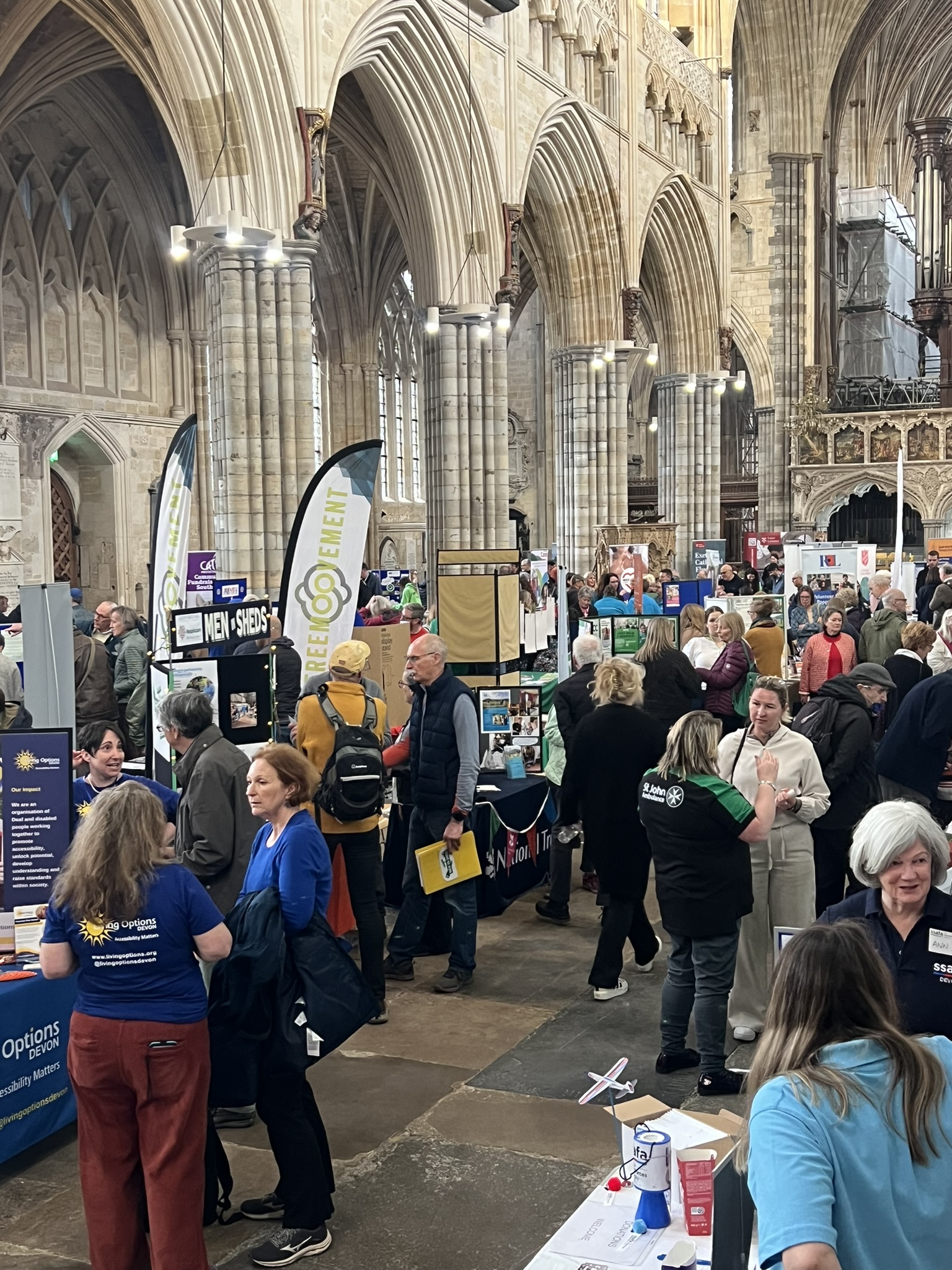
We completed a survey for organisations working with volunteers in Exeter.
We wanted to gather the insight of our peers; to better understand what challenges exist around volunteer management and what could be done to address them.
63 organisations responded, representing charities, community groups, social enterprises, voluntary organisations, faith groups and public sector organisations. Responses ranged from organisations with just a handful of volunteers to those involving more than 100 volunteers. Here are the full results.
Quotes received showing the value of volunteering:
“Volunteers bring so much more than their time. They bring energy, compassion, fresh ideas, and valuable life experience, helping us reach more people and strengthen the support we provide. They also create meaningful connections within the community and help make our organisation feel welcoming and inclusive.
Most importantly, volunteers share our belief in what we do. Their dedication and kindness remind us that positive change is something we create together, and their contribution is truly valued.” St Petrocks
“We specifically recruit volunteer befrienders to be matched with children and young people in the care system, offering them a long term supportive friendship. Given the current focus on the “care cliff” and the tragic deaths of 112 care leavers in 2025, our volunteers are more important now than ever before.” National Youth Advocacy Service
“We simply could not do what we do without them – they’re precious in every way and go above and beyond. Our Community would not be so full and vibrant; there would be more division and inequality. Volunteers make Communities better, safer places to live!” The Beacon Centre
“Volunteering at RAMM is a great way to get involved with Exeter’s world class museum – you can share your knowledge, learn new skills and meet new people. Volunteers range from university students who wish to gain some valuable experience, those between roles looking to diversify their skills to retired or part-time workers who wish to give back to the community. We simply could not do what we do without them – they’re precious in every way and go above and beyond. Our Community would not be so full and vibrant; there would be more division and inequality. Volunteers make Communities better, safer places to live!” RAMM
“Volunteers bring enormous value to our organisation by sharing their real-world experience, skills and knowledge with young people. They help bring our programmes to life, giving students the opportunity to learn directly from people from a wide range of industries and backgrounds.
They also provide young people with positive role models, helping them build confidence, develop employability and enterprise skills, and better understand the world of work. For many young people, particularly those who may have fewer opportunities to engage with employers, that interaction can be incredibly valuable.
Volunteers also extend the reach and impact of our organisation, allowing us to support more young people while creating meaningful connections between schools, communities and businesses.” Young Enterprise
Key findings
1. Volunteers are seen as essential, not optional
A remarkably consistent message emerged across the survey: organisations simply could not deliver their services without volunteers.
Volunteers were valued for:
- Increasing capacity and service delivery
- Bringing skills, experience and lived experience
- Reducing pressure on paid staff
- Strengthening community connections
- Improving wellbeing for both volunteers and beneficiaries
- Helping organisations remain financially viable
Many organisations described volunteers as the backbone of their work.
2. Recruitment is by far the biggest challenge
The most common challenge across organisations was recruiting enough volunteers, followed closely by:
- Recruiting volunteers with the right skills
- Retaining volunteers
- Finding sufficient staff time to support volunteers
Several themes emerged:
- Competition between organisations for the same volunteer pool
- Difficulty attracting younger volunteers
- Challenges recruiting people for specialist, leadership or trustee roles
- Limited availability due to work pressures, caring responsibilities and cost of living pressures
- Difficulty attracting volunteers for regular or long-term commitments rather than one-off opportunities
3. Recruitment is harder than retention
Many organisations rated volunteer retention relatively positively once volunteers are engaged.
The challenge is often:
“Getting people through the door in the first place.”
Several organisations reported that volunteers stay for many years once they become involved.
4. Capacity to support volunteers is stretched
A significant number of organisations highlighted the amount of staff time required for:
- Recruitment and onboarding
- DBS checks and safeguarding
- Training
- Volunteer management
- Communication and engagement
This was particularly challenging for smaller organisations with limited or no paid staff.
5. Training is a recurring need
While some larger organisations have established internal training, many respondents requested:
- Safeguarding training
- Volunteer management training
- First aid and manual handling
- General induction resources
- Trustee training
- Shared training opportunities across organisations
Several suggested that city-wide or shared training provision could reduce duplication and costs.
6. Diversity and specialist recruitment remain difficult
A number of organisations identified challenges in recruiting:
- Younger volunteers
- People with specific professional skills
- Trustees
- Volunteer leaders
- Fundraisers
- Drivers
- IT volunteers
- Volunteers reflecting a broader range of backgrounds and demographics
Some organisations also highlighted the need for additional support to make volunteering accessible for people with disabilities or additional needs.
Appetite for collaboration
One of the clearest findings was the strong support for greater collaboration.
Many respondents expressed interest in a quarterly volunteering network for Exeter organisations.
The most popular things organisations want from a network were:
- Networking with other organisations
- Sharing volunteer recruitment opportunities
- Sharing ideas and good practice
- Training and workshops
- Information about volunteering trends and opportunities
- Peer support and problem solving
- Resources and guidance
- Guest speakers
Many organisations specifically requested a space to discuss shared challenges and learn what is working elsewhere.
Interesting findings
Shared challenges despite different sizes
Whether an organisation had 5 volunteers or 500, many reported the same issues:
- Recruitment
- Capacity
- Training
- Retention
- Finding volunteers with specialist skills
This suggests opportunities for collective solutions rather than organisation-by-organisation approaches.
Demand for centralised volunteering support
Several organisations independently suggested:
- A central volunteer hub
- Better city-wide promotion of opportunities
- Shared volunteer training
- Volunteer management support
- A “volunteer passport” approach
- Shared DBS or onboarding information
This was one of the strongest recurring themes in the free-text responses.
Cost is creating barriers
Several respondents highlighted:
- DBS costs
- Volunteer expenses
- Training costs
- Lack of funding to support volunteers
For smaller organisations in particular, volunteering is not cost-free and investment is needed to recruit and retain volunteers effectively
Next Steps
Explore opportunities and understand existing offers
Establish gaps in service and ‘in-person’ need
Engage with Devon-based CVS services and VCSE organisations that offer support for volunteering
Explore available services and resources available to Exeter
Look at collaboration opportunities
To stay up to date with next steps please email: [email protected] to be added to our mailing list.